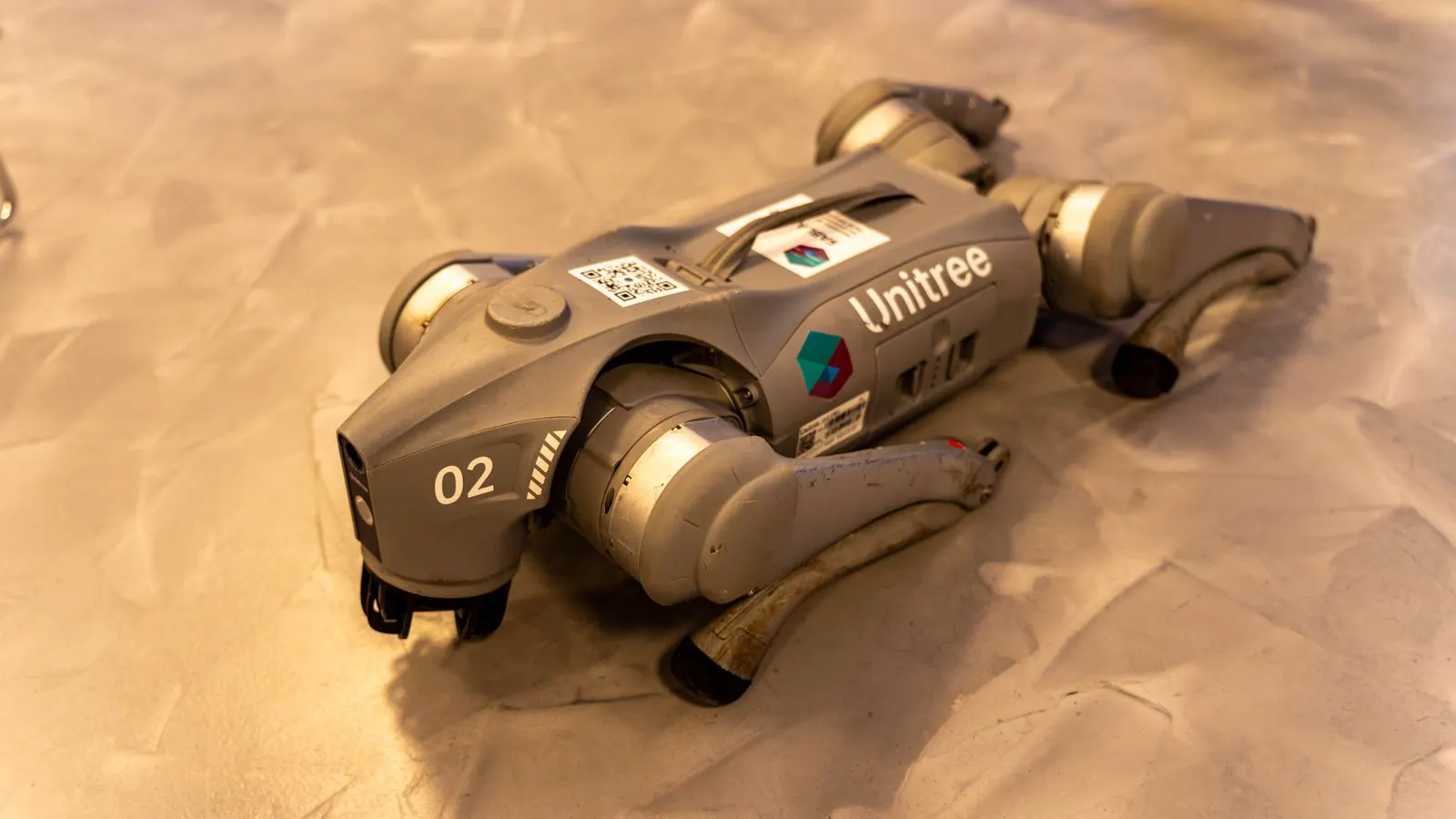
International support structures are moving toward distributed, multi-site service networks. Buyers should plan for local parts availability, remote diagnostics, and standardized data access. This shift changes how you evaluate after sales support and robot distributor capabilities.
- Global robot service is shifting from single-hub support to distributed regional networks.
- Remote diagnostics and standardized data access are becoming baseline expectations.
- Parts logistics now determine uptime more than initial hardware price.
- Buyers should verify after sales support coverage in writing.
- Robot distributor capabilities are expanding beyond equipment sales.
How service hubs are changing
The traditional model placed a single regional hub at the center of support. One center handled parts storage, technician dispatch, and controller updates. That model assumed stable shipping lanes and predictable failure rates. It also assumed that a plant could wait several days for a specific drive module or encoder assembly.
That assumption is breaking down. Plants now run smaller batches with tighter delivery windows. A robot line down for four days means missed shipments, not just idle equipment. Service providers are responding by moving inventory closer to end users. Regional depots now hold critical spares, and some operators keep fast-response kits at major manufacturing clusters.
The change is not just about distance. It is about who holds the data. A service provider cannot optimize parts placement if it cannot see which error codes appear on which machines, in which regions. The shift toward global robot service means support networks are becoming data-driven. A hub in one country may hold a specific motor assembly because failure data from another region shows that unit is aging.
For buyers, this means the service contract you sign at purchase is not the same as the support you get five years later. The network expands, contracts are renegotiated, and service scope shifts. You need to understand how the network is evolving and how your plant fits into it.
Where parts availability becomes the real risk
The most common mistake is treating parts supply as an afterthought. At purchase, the robot works. The controller is stable. The integration is complete. Then a spindle bearing fails on a Tuesday morning, and the question becomes how long the part takes to arrive.
In the past, that wait might have been acceptable. A spare robot cell could cover the gap. Or the production schedule had slack. Today, many cells are single points of failure. There is no backup. The line stops until the part arrives.
Distributed service networks change this dynamic. A local depot can ship a bearing assembly within hours. A central hub might take three days. That difference is the difference between a maintenance window and a production loss.
Buyers should ask specific questions during evaluation. Where are critical spares stored relative to the plant? What is the typical lead time for a drive board? What is the lead time for a vision component? These are not theoretical questions. They determine your downtime cost.
A practical check is to request a parts availability schedule for the first three years. Not a marketing brochure. A written list showing which parts are held locally, which are regional, and which require central fulfillment. If the supplier cannot provide this, that is a signal.
How remote diagnostics change the support relationship
Service providers used to send a technician to diagnose a problem. The technician arrived, ran tests, identified the fault, and either replaced the part or escalated the issue. That process took time, but it was reliable.
Now, many controllers can stream diagnostic data to a central platform. Error codes, temperature readings, vibration signatures, and cycle counts all feed into a dashboard. A service engineer in another country can see the trend before the robot fails. They can flag a motor winding that is heating up slightly. They can schedule a part shipment before the line stops.
This changes the nature of after sales support. It becomes proactive rather than reactive. The service provider is no longer just a repair service. It is a monitoring service. The contract now includes data access, not just labor hours.
For the plant, this creates a new responsibility. The robot must remain connected to the service network. Cybersecurity becomes a factor. The controller firmware must support remote access without exposing the production network. The plant IT team and the robot maintenance team now share a dependency that did not exist before.
Buyers should clarify data ownership in the service agreement. Who can see the diagnostic data? Can the plant export it for its own analysis? What happens if the service provider changes its platform? A contract that locks the plant into a single diagnostic interface is a long-term risk.
The changing role of the robot distributor
A robot distributor used to be a sales channel. They sold the arm, the controller, and the basic accessories. Service came directly from the manufacturer. The distributor made money on the hardware margin.
That model is thinning. Distributors are now expected to manage the service relationship. They handle parts orders, schedule technicians, and escalate issues. In many regions, the distributor is the only local contact. The manufacturer may not have a physical presence in that country.
This shift gives the distributor more power but also more risk. If the distributor lacks technical depth, the plant is stuck. A local distributor who understands the specific application, the integration, and the failure modes can save a plant weeks of downtime. A distributor who treats service as an afterthought will not.
Buyers should evaluate the distributor as a technical partner, not just a vendor. Ask how many service engineers they employ. What is their average response time. Do they have a local parts warehouse. Can they support the robot after the manufacturer changes its service structure.
The relationship between manufacturer and distributor is not always transparent. Sometimes the distributor has direct access to manufacturer service teams. Sometimes they do not. That difference matters when a critical failure occurs and the manufacturer is slow to respond. A distributor with a direct escalation path is worth more than a distributor with a lower price.
How service contracts are being restructured
Service contracts are moving away from simple annual fees. The old model was straightforward. Pay a fixed amount per year, get coverage for parts and labor, and hope for the best. That model is being replaced by more granular structures.
New contracts often separate labor from parts. They define response times in hours, not days. They specify which error codes are covered and which require an additional charge. They include uptime commitments, not just availability commitments.
This restructuring gives buyers more control but requires more attention. A contract that promises a four-hour response time for controller failures but gives a ten-day response time for vision components is not the same as a contract that covers both equally. The difference in wording changes the cost of downtime.
Buyers should read the contract with a maintenance planner, not just a purchasing manager. The maintenance planner understands the failure modes. The purchasing manager understands the price. Both perspectives are needed.
A practical step is to map the contract terms against the plant’s criticality list. Identify the five components that, if failed, would stop production. Check the contract for those specific parts. Verify the response time for each. If the contract does not distinguish between critical and non-critical components, the contract is too generic for your risk profile.
What buyers should plan for over the next three years
The shift is not a single event. It is a gradual restructuring of how support is delivered. Buyers should plan for five specific changes.
- Parts availability will become a primary selection criterion. A plant should not choose a robot based solely on cycle time or payload. The service network that supports the robot matters as much as the hardware.
- Remote access will be standard. Plants should have a clear policy on how diagnostic data flows to service providers. This policy should be reviewed with IT before the robot is installed.
- Distributor technical depth will determine service quality. A plant should evaluate the distributor’s service team, not just their sales team.
- Service contracts will be more granular. The old annual fee model will disappear. Contracts will define response times, coverage scope, and data access in detail.
- Multi-site standardization will increase. Plants that operate in multiple regions will face pressure to standardize robot models and service interfaces. A plant that buys different robot types in each region will face higher service complexity.
These shifts are not optional. They are the direction of the market. Buyers who plan for them will find support that fits their production needs. Buyers who ignore them will find themselves paying for downtime they could have prevented.
The key is to treat global robot service as a supply chain issue, not a technical issue. The same logic that applies to raw material sourcing applies here. Where is the part? How fast does it move? What is the backup plan? The answers to those questions will determine whether your robot stays running or sits idle.
How to verify service coverage before purchase
Verification is not a formality. It is a risk control. Before signing a purchase agreement, the plant should complete a service readiness review.
The review starts with a site walk. The maintenance team walks the plant floor and identifies every critical component. A spindle, a reducer, a servo drive, a vision camera, a safety scanner. Each component gets a failure mode note. What happens when it fails. How long does it take to replace. What is the production impact.
The next step is to request a service coverage map. This is not a brochure. It is a document showing where parts are stored, where technicians are based, and what the response time is for each component type. The plant should compare this map against its site location. If the nearest parts depot is 800 kilometers away, the response time is not four hours. It is two days.
The final step is a pilot service engagement. Before full production, the plant should run a short trial. A technician visits. A simulated failure is tested. The response time is measured. The data flow is checked. The result is a baseline. That baseline becomes part of the purchase contract.
This process takes time. It takes documentation. It takes coordination between the plant, the robot supplier, and the distributor. But it prevents a common mistake: buying a robot that works, then discovering that the service network cannot support it when it fails.
The goal is not to find a perfect service contract. The goal is to find a service contract that matches the plant’s risk profile. A high-mix, high-velocity plant needs different coverage than a single-product, low-velocity plant. The service network should reflect that difference.
Global robot service is moving from a fixed, central model to a distributed, data-driven model. The buyers who adapt will find support that keeps their lines running. The buyers who do not will find that the cost of downtime is higher than they expected. The time to plan is before the robot is ordered, not after it fails.
Frequently asked questions
What does global robot service mean for a plant with multiple sites?
It means the service provider needs a distributed parts network and standardized data access across regions. The plant should verify that each site has defined response times and parts coverage, not just a single central hub.
How should a plant evaluate a robot distributor's service capability?
Ask how many service engineers they employ locally, where their parts warehouse is located, and what their average response time is for critical components. A distributor with a local technical team and parts stock is more reliable than one that only handles sales.
What should a plant do about diagnostic data access in a service contract?
Define data ownership in writing. Specify which data the service provider can access, how it is transmitted, and whether the plant can export it. This prevents a situation where the plant loses control of its own machine data.
How long should a plant keep the service readiness review after installation?
The review should be updated annually and after any major firmware update or production change. Failure modes shift over time. A component that was reliable in year one may show different wear patterns in year three.
What is the difference between uptime commitment and availability commitment in a service contract?
An availability commitment means the part is in stock. An uptime commitment means the line is restored within a defined time. A plant should look for uptime commitments on critical components, not just stock availability.