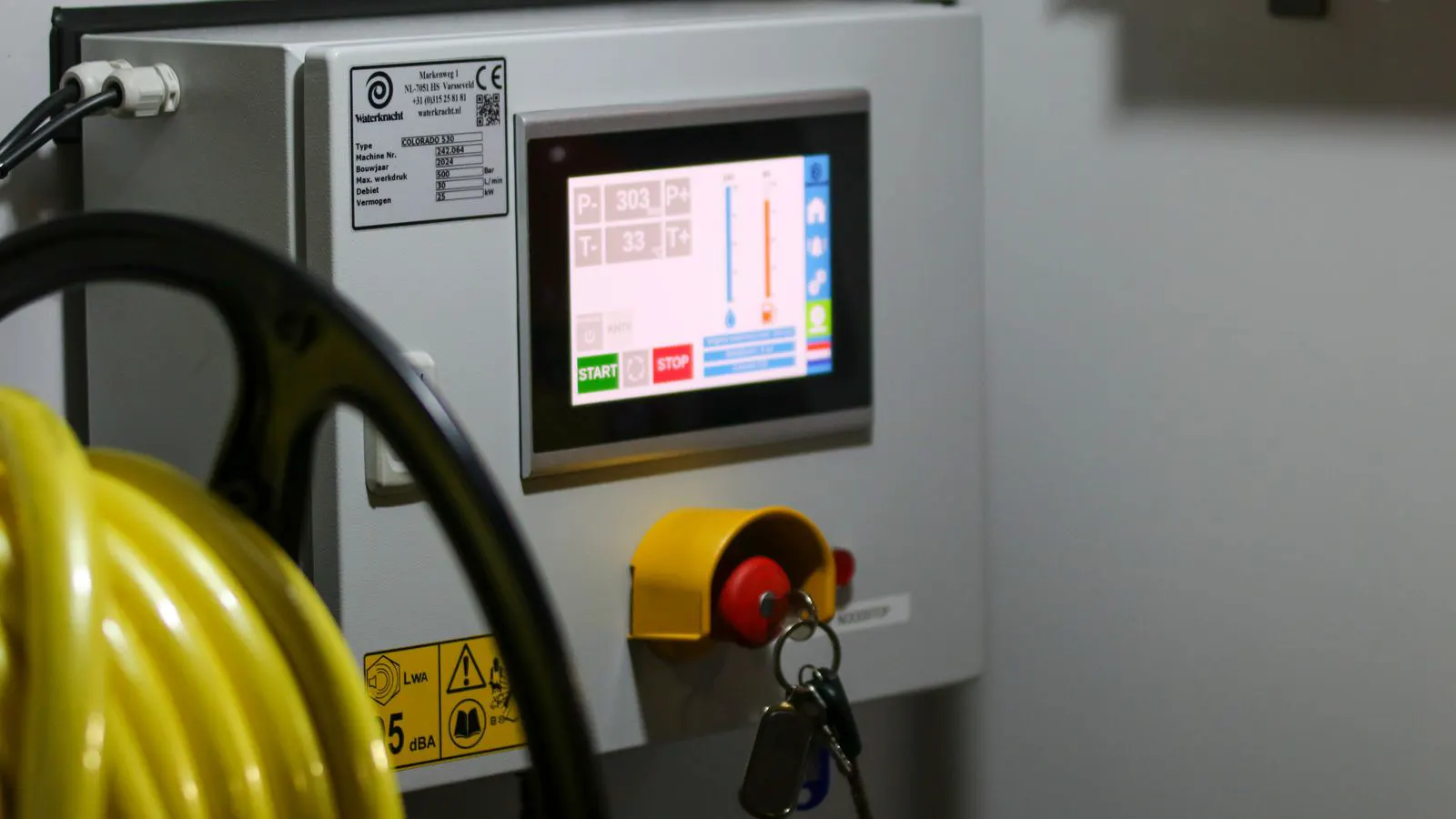
Collaborative robot programming is moving away from fixed cycles toward human-responsive logic. This outlook highlights five shifts in robot integration and industrial automation. It covers how to prepare your teams, infrastructure, and safety systems for shared workspaces.
- Programming is shifting from fixed cycles to adaptive logic that reacts to human presence.
- Teams will rely more on high-level scripting and natural language than low-level code.
- Safety logic and data flow must be integrated early, not bolted on later.
- Vendor neutrality and open communication standards reduce long-term risk.
- Training and change management are as critical as the software itself.
Where Collaborative Programming Is Heading
Collaborative robot programming is no longer about mapping a fixed path and locking it in. The goal is now to build systems that adapt to human presence, changing workloads, and shared floor space. This shift changes how teams approach robot integration, safety logic, and long-term maintenance.
The core change is in control flow. Instead of assuming the robot and human occupy separate zones at all times, programming now accounts for continuous interaction. The robot must sense, decide, and adjust in real time. This requires a different mindset from traditional industrial automation.
Buyers should plan for a move toward higher-level programming. The focus is shifting from individual motion commands to task-level logic. This makes systems more flexible but also raises the bar on integration quality.
Shift One: From Fixed Cycles to Adaptive Logic
Traditional programming relies on fixed cycles. The robot executes the same sequence until interrupted or stopped. In collaborative environments, that model breaks down. The human may step in, hand off a part, or adjust a fixture at any moment.
Adaptive logic requires the robot to monitor the environment continuously. It must detect when a human is near a critical motion path and modify its behavior. This could mean slowing down, stopping, or waiting. The logic must be deterministic enough to be safe, but flexible enough to handle variation.
This shift affects how you structure your code. Instead of writing long, unbroken sequences, you write smaller, repeatable modules. Each module handles one task: pick, place, verify, hand off. The control system manages the flow between modules based on sensor input and human state.
The practical implication is that programming becomes more about state management than path planning. You are less likely to spend time polishing a motion profile and more likely to define the rules that govern when the robot acts.
Shift Two: Rising Use of High-Level Scripting
Low-level coding is not disappearing, but it is moving to the background. Most collaborative robot programming is shifting toward high-level scripting languages. These languages abstract away the complex motion calculations and focus on task logic.
This change has two major benefits. First, it reduces the barrier to entry. Technicians and process engineers can modify logic without deep expertise in low-level control. Second, it speeds up development. Writing a task in high-level code is faster and less error-prone than writing equivalent low-level commands.
The trade-off is in performance and precision. High-level scripting adds a layer of abstraction. For most collaborative tasks, this is acceptable. For high-speed or high-precision work, you may still need low-level code for specific segments.
A practical approach is a hybrid model. Use high-level scripting for task logic, hand-offs, and state management. Drop down to low-level code only for critical motion segments or safety-critical checks. This balances development speed with performance.
Shift Three: Integration of Natural Language
Natural language programming is moving from concept to practical use. Users can describe a task in plain words, and the system translates that into executable logic. This is not about replacing engineers, but about speeding up routine changes.
The shift is most visible in setup and adjustment. A technician can say, “move the robot two millimeters closer to the fixture,” and the system updates the program. This reduces the need to edit code directly. It also lowers the risk of human error during manual adjustments.
The technology is still maturing. Accuracy depends on the quality of the language model and the clarity of the input. For critical safety logic, you should never rely on natural language. Safety checks must be explicit and verified.
The practical takeaway is to treat natural language as a tool for non-critical adjustments. Use it for setup, fine-tuning, and documentation. Keep safety and critical control logic in explicit code that is reviewed and tested.
Shift Four: Deeper Integration of Safety Logic
In traditional automation, safety logic is often separate from robot programming. You have safety relays, light curtains, and interlocks that operate independently of the robot controller. In collaborative environments, this separation is less effective.
The shift is toward integrated safety logic. The robot controller manages safety in real time, based on sensor input and human presence. This means safety checks are part of the programming process, not an afterthought.
This changes how you design your systems. You must define safety states, transition rules, and response actions within the robot program. You also need to verify that these rules work under all conditions, including sensor failure.
The practical impact is that safety integration must happen early in the development process. If you add safety logic after the main program is written, you risk gaps and inconsistencies. Plan safety states from the start, and test them thoroughly before commissioning.
Shift Five: Standardization and Open Communication
Vendor lock-in is a growing concern. As collaborative robotics becomes more common, buyers want the ability to work with multiple vendors and open standards. This is pushing the industry toward more standardized communication protocols.
The shift is toward open interfaces. Instead of proprietary data formats, systems use open standards for data exchange, control, and diagnostics. This makes it easier to integrate robots from different manufacturers and to upgrade or replace components.
The trade-off is in performance and ease of integration. Open standards can introduce latency or require more effort to configure. For high-speed or tightly coupled systems, you may need to optimize these interfaces carefully.
The practical takeaway is to prioritize open communication standards in your procurement and integration plans. Ask vendors about their support for open protocols and data formats. This reduces long-term risk and gives you more flexibility.
How to Prepare Your Teams and Infrastructure
Preparing for these shifts requires more than buying new software. It requires changes in how your teams work and how your infrastructure is set up.
1. Invest in Training. Your team needs to understand the new programming paradigms. This includes high-level scripting, adaptive logic, and integrated safety. Training should be hands-on, not just theoretical.
2. Upgrade Your Infrastructure. Ensure your network, storage, and computing resources can handle the increased data flow and real-time processing. Collaborative systems generate more data and require faster response times.
3. Redefine Your Integration Process. Move safety and human-robot interaction logic to the front of your integration process. Do not treat them as add-ons. Build them into the core of your programming and testing workflow.
4. Standardize Your Data. Use open data formats and communication protocols wherever possible. This makes it easier to integrate new components and maintain your systems over time.
5. Plan for Change Management. The shift in programming methodologies will change how your team works. Be prepared for a period of adjustment. Provide support, clear documentation, and a path for continuous improvement.
A Practical Comparison of Programming Approaches
The table below compares traditional and collaborative programming approaches. It highlights the key differences in logic, safety, and development.
| Aspect | Traditional Approach | Collaborative Approach |
|---|---|---|
| Control Logic | Fixed cycles | Adaptive, state-based logic |
| Safety | Separate interlocks | Integrated, real-time checks |
| Programming Level | Primarily low-level | High-level scripting, hybrid |
| Human Interaction | Segregated zones | Continuous, adaptive interaction |
| Development Speed | Slower, more manual | Faster, more automated |
The table shows the core differences. The collaborative approach is more complex in design but more flexible in operation. It requires more upfront planning but offers greater adaptability.
Final Thoughts for Buyers
The future of robot programming in collaborative workspaces is not a single technology, but a set of shifts in how systems are designed, built, and maintained. The move toward adaptive logic, high-level scripting, and integrated safety is already underway.
Buyers should plan for these shifts now. Do not wait for the technology to mature completely. Start by identifying the areas where your current systems are most constrained. Focus your preparation there.
The goal is not to replace your existing expertise. It is to extend it. The new programming methodologies give your team more power and flexibility. But they also raise the bar on integration quality and safety.
Prepare your teams, upgrade your infrastructure, and prioritize open standards. This will put you in a strong position to take advantage of the next wave of collaborative robotics.
Frequently asked questions
Is robot programming becoming more accessible?
Yes, high-level scripting and natural language tools are lowering the barrier to entry. However, complex safety and motion logic still requires specialized expertise.
Can collaborative robots replace traditional industrial automation?
No. They are best suited for flexible, human-interaction-heavy tasks. Traditional automation remains better for high-speed, high-precision, or fully automated lines.
How do you ensure safety in adaptive robot programming?
Safety must be integrated into the core logic, not added later. Use explicit safety states, real-time monitoring, and thorough testing under all conditions.
What is the main risk of using natural language for robot programming?
The main risk is ambiguity. Natural language can be misinterpreted, leading to incorrect actions. Use it only for non-critical adjustments, and keep safety logic in explicit code.
Should I invest in open communication standards now?
Yes. Open standards reduce vendor lock-in and make it easier to integrate and upgrade systems. Prioritize them in your procurement and integration planning.